Breaking into the botanical wellness space used to look like small-batch experimentation in commercial kitchens. Today, that informal era is long gone. The modern hemp marketplace is sophisticated, capital-intensive, and heavily scrutinized by retail buyers and regulatory bodies alike. For an emerging entrepreneur or an expanding wellness company, building an in-house extraction and bottling facility requires millions of dollars in specialized infrastructure, cleanroom installations, and specialized staffing.
Private-label manufacturing provides an alternative route to market. By collaborating with an established contract manufacturing organization, emerging brands can bring proprietary, shelf-ready cannabinoid products to market with enterprise-grade quality and significantly lower capital overhead. However, navigating this partnership successfully requires understanding how the manufacturing pipeline operates from initial concept to the warehouse floor.
Distinguishing Private Label from White Label
Before initiating discussions with manufacturing partners, brand founders must understand the distinction between white-label and private-label production. While these terms are frequently conflated, they represent fundamentally different business strategies.
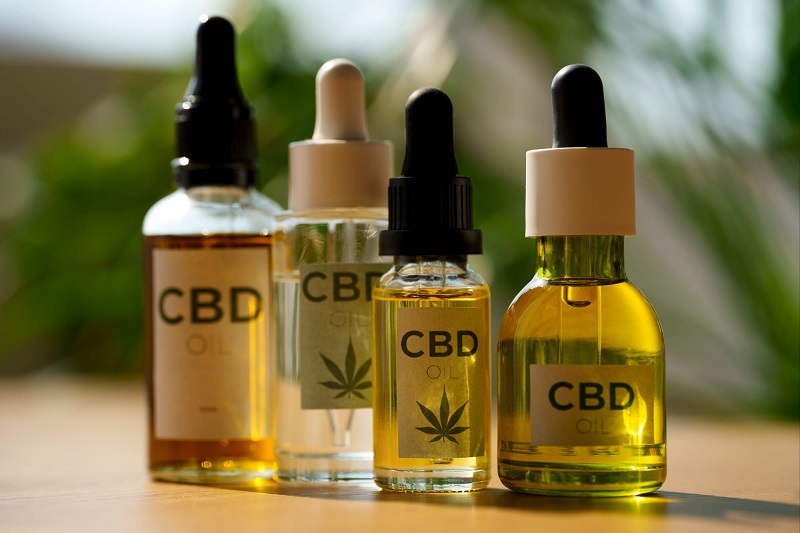
White-label manufacturing is essentially an off-the-shelf transaction. The manufacturer produces large runs of standardized formulas, such as a basic 1,000 mg unflavored hemp tincture in coconut oil, and offers them to multiple brands. Each buyer applies their own label and branding to identical product stock. This approach offers speed to market and lower upfront minimum order commitments, but it offers zero product differentiation. When dozens of brands sell the exact same formula under different names, price becomes the only competitive lever.
Private-label manufacturing, by contrast, provides custom product development. The manufacturer acts as your dedicated bench chemist and production facility, developing a unique formulation tailored to your brand’s specifications. You determine the cannabinoid profile, select the carrier matrix, introduce functional botanicals or adaptogens, and customize the flavor and aroma profile. Because the formulation is built specifically for your brand, competitors cannot simply call your factory and order the exact same item. This defensibility creates lasting enterprise value.
The Stages of the Manufacturing Process
Bringing a custom CBD SKU from concept to pallet delivery follows a disciplined, multi-stage workflow designed to balance product safety, stability, and sensory appeal.
Concept Discovery and Formulation Development
Every project starts with the formulation brief. During this phase, you define the product’s target consumer, preferred format, and therapeutic positioning. You might decide on an evening gummy combining broad-spectrum distillate with passionflower and melatonin, or an athletic recovery balm featuring menthol, arnica, and high-potency cannabidiol.
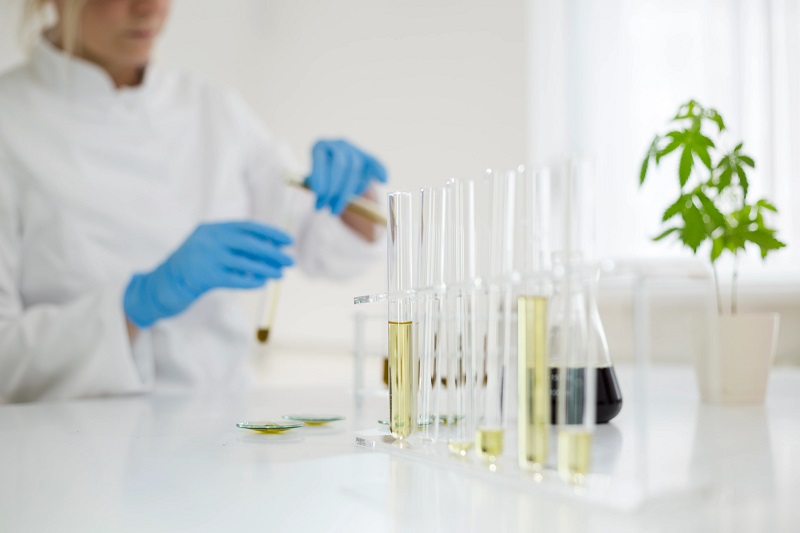
The manufacturer’s formulation scientists take these parameters to the laboratory bench. They create pilot samples to evaluate organoleptic properties, ensuring the flavor, scent, texture, and mouthfeel match brand expectations. This stage also evaluates chemical compatibility. Cannabinoids are delicate lipophilic compounds; pairing them with poorly matched essential oils, acids, or emulsifiers can cause active ingredients to degrade or separate over time. Once the brand approves the bench prototype, the formula is locked into an official Bill of Materials.
Raw Material Sourcing and Extract Selection
A premium finished product requires verified starting inputs. The manufacturer must source agricultural biomass or crude extract from domestic farms operating in states with rigorous agricultural oversight. The base cannabinoid extract is selected according to the product’s legal and functional requirements:
- Full-Spectrum Extract: Retains the full array of native plant cannabinoids, including trace amounts of delta-9 THC below the federal 0.3 percent limit, along with natural terpenes and flavonoids.
- Broad-Spectrum Distillate: Undergoes chromatographic remediation to selectively strip out THC while preserving minor cannabinoids like CBG and CBN to support the entourage effect.
- Cannabinoid Isolates: Refined crystalline powders that test at 99 percent purity or higher, ideal for brands requiring total THC elimination or precise single-compound dosing.
Pilot Testing and Batch Compounding
Scaling a formula from a 500-milliliter bench beaker to a 500-gallon industrial mixing tank requires careful process engineering. The compounding team runs pilot batches to confirm that active ingredients disperse evenly throughout the base medium. This step is particularly vital for confectionery products like gummies and water-soluble beverage emulsions, where uneven mixing can create hot spots with inconsistent cannabinoid dosing from one serving to the next.
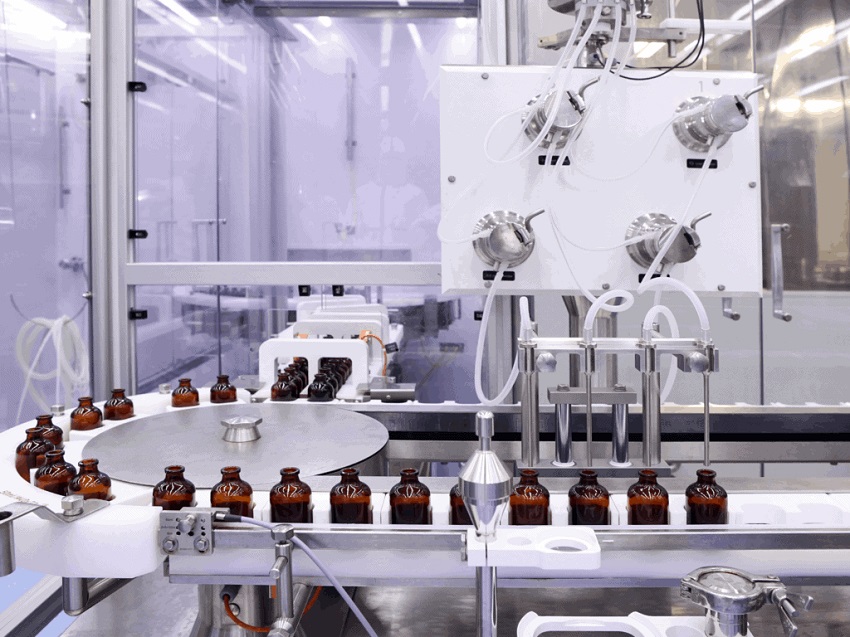
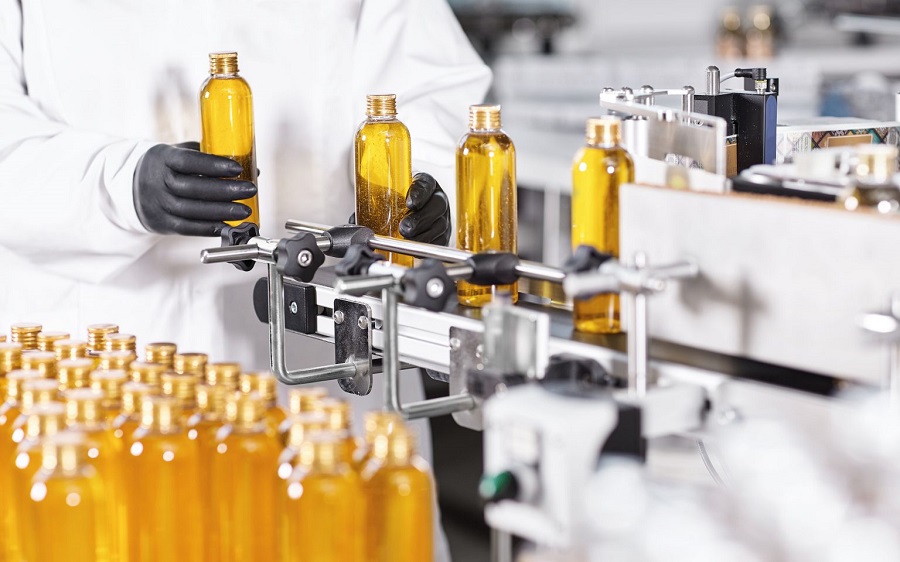
Once the batch is compounded, it moves to automated filling and packaging lines. Specialized machinery fills, caps, heat-seals, and lot-codes each bottle in controlled cleanrooms designed to prevent particulate or microbial contamination.
Analytical Validation and Quality Assurance
No commercial run is complete until the batch passes extensive analytical screening. Accredited, third-party laboratories test random pulls from the production run to generate a comprehensive Certificate of Analysis (COA).
A production batch cannot be released until testing confirms the active cannabinoid potency matches label claims and demonstrates non-detectable levels of residual solvents, heavy metals, synthetic pesticides, mold, and environmental toxins. The manufacturer ties this testing data directly to the batch number printed on the container, giving retailers and end consumers transparent proof of safety.
Managing Minimum Orders and Unit Economics
One of the steepest hurdles for early-stage brands is balancing production volume against cash flow. Because private-label runs involve custom recipe mixing, equipment cleaning, and bespoke packaging line setup, manufacturers require Minimum Order Quantities (MOQs).
For custom liquid tinctures or topicals, MOQs typically range from 1,000 to 2,500 units per individual SKU. For complex items like pectin-based gummies or softgels, minimums frequently start at 2,500 to 5,000 units due to the scale of the machinery required.
Founders must carefully budget for these thresholds. A lower manufacturing cost per unit achieved through high volume means nothing if unsold inventory sits in a warehouse expiring past its shelf life. Emerging companies should work with contract manufacturers that offer stepped tiers or reasonable starter batches, allowing the business to test market resonance before committing major capital to five-figure production runs.
Selecting and Vetting a Contract Manufacturer
Choosing a manufacturing partner is one of the most critical operational decisions a wellness founder will make. Your partner holds your brand’s reputation in their hands.
When auditing prospective facilities, look past attractive sales presentations and examine operational credentials. Insist on working exclusively with facilities that operate in compliance with Current Good Manufacturing Practices (cGMP) and hold independent registrations such as ISO 9001 or NSF certifications. These designations confirm the facility maintains rigid sanitary protocols, air filtration standards, and comprehensive batch-production records.
Ask direct questions about turnaround lead times, supply chain redundancies, and internal testing capabilities. A reliable partner acts as an extension of your company, offering proactive technical guidance, transparent communication regarding raw material costs, and scalable capacity that can support your growth as national retail distribution expands.
Private-label manufacturing bridges the divide between culinary ambition and industrial-grade execution. By leveraging an experienced contract manufacturer’s technical infrastructure, emerging wellness founders can bypass prohibitive capital expenditures and focus their resources where they matter most: building community, telling their story, and establishing a memorable brand presence.