
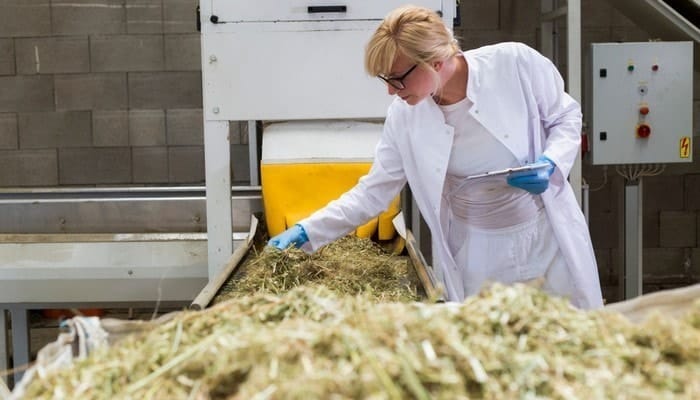
For decades, industrial hemp was caught in a frustrating commercial paradox. Agronomists celebrated its rapid growth cycle, carbon sequestration capacity, and dense tensile strength, yet manufacturers largely relegated the harvested crop to low-margin, bulk commodity markets like animal bedding, basic animal feed, and coarse nonwoven matting. The barrier was never biological potential; it was processing infrastructure.
Early processing relied on vintage decortication machinery and unpredictable field retting techniques that damaged delicate fibers and left high levels of particulate contamination. Modern manufacturing, by contrast, demands absolute consistency, high purity, and precise material tolerances.
That technological divide is finally closing. A convergence of precision mechanical engineering, thermodynamic extraction, and green nanochemistry is transforming industrial hemp from a rudimentary raw harvest into a standardized, high-performance feedstock. Across sectors ranging from advanced automotive composites to electrochemical energy storage, emerging processing innovations are unlocking the true industrial value of the whole hemp stalk.
Precision Decortication and Aerodynamic Fractionation
The foundational bottleneck of hemp processing has always been decortication—the mechanical separation of the outer, high-tensile bast fibers from the inner, woody core known as hurd. Traditional hammer mills and rudimentary crushers beat the plant aggressively, fracturing the long bast fibers, embedding fine hurd dust into the fiber bundles, and generating substantial waste.
Next-generation decortication systems take a fundamentally different, low-impact mechanical approach. Utilizing variable-speed counter-rotating rollers with customized fluting profiles, modern processing lines progressively crimp and flex the dried stalks rather than pulverizing them. This controlled deformation shears the lignin bond between the bark and core without snapping individual fibers.
Following mechanical delamination, modern facilities increasingly integrate closed-loop aerodynamic fractionation. High-velocity air classification columns and electrostatic separators lift the lighter, cleaner bast fibers while allowing the denser hurd particles to drop out by specific gravity. This continuous, multi-stage separation achieves bast fiber purity levels exceeding 98%, completely eliminating the secondary cleaning cycles that previously made domestic hemp processing cost-prohibitive.
Modern Degumming: From Weather-Dependent Retting to Controlled Physics
Separating bast from hurd is only the first step. Unprocessed bast fiber bundles remain glued together by non-cellulosic matrices composed of pectin, hemicellulose, and lignin. For centuries, industry relied on field or dew retting—leaving cut stalks across damp pastures for weeks so native fungi could digest these natural binders. Dew retting is notoriously erratic, weather-dependent, and prone to fiber degradation.
To feed modern composite manufacturing and continuous yarn-spinning machinery, processors are turning to fast, highly repeatable degumming alternatives that strip gums in minutes rather than weeks.
Steam Explosion Processing
Steam explosion, or STEX, has emerged as one of the most effective thermo-hydro-mechanical separation methods. Raw bast fiber bundles are placed in a high-pressure reactor vessel and exposed to saturated steam at temperatures between 350°F and 400°F under controlled pressure.
After a brief residence time, the vessel undergoes explosive depressurization. The instantaneous release of pressure causes the moisture trapped inside the cellular pores of the plant to flash boil and violently expand, mechanically fracturing the intercellular pectin without degrading the primary cellulose backbone. The result is a clean, fully individualize-able fiber with uniform diameter, elevated tensile strength, and zero reliance on harsh chemical solvents.
Ultrasonic and Enzymatic Cleavage
Where thermal energy is impractical, advanced acoustics and targeted biotechnology are filling the void. High-power ultrasonic cavitation passes acoustic waves through an aqueous bath containing coarse hemp fibers, creating microscopic vacuum bubbles that violently collapse. These micro-implosions generate localized shear stress and supersonic liquid microjets that strip away stubborn surface gums within 60 to 90 seconds.
Similarly, advanced enzymatic digestion uses bio-engineered enzymes, particularly pectinases and xylanases, to target specific molecular bonds. Unlike aggressive caustic soda (sodium hydroxide) boiling, which weakens cellulose chains and generates hazardous industrial effluent, enzymatic processing works at moderate temperatures and neutral pH levels. This process strips natural binders cleanly, yielding supple, cottonized fibers that drop directly into standard automated textile and composite looms.
Nanocellulose Isolation and Functionalized Bio-Resins
The most lucrative frontiers for industrial hemp lie at the nanometer scale. Hemp bast fiber contains an unusually high cellulose fraction, routinely reaching 65% to 75%, characterized by exceptionally long, crystalline molecular structures. Materials researchers are exploiting this cellular architecture to produce cellulose nanofibrils (CNF) and cellulose nanocrystals (CNC).
Through high-pressure microfluidization and mild acid hydrolysis, bulk hemp cellulose is disassembled into nano-scale fibrils. When dispersed into liquid matrices or dried into structural films, hemp-derived nanocellulose demonstrates a specific tensile strength and modulus that rivals synthetic aramid fibers while weighing significantly less.
These nanomaterials are finding rapid integration as structural reinforcing agents in transparent barrier packaging, lightweight automotive coatings, and biodegradable film barriers that eliminate single-use petroleum plastics without sacrificing oxygen or moisture resistance.
Activated Carbon Nanosheets for High-Rate Energy Storage
While the outer bast fiber captures attention for structural reinforcement, processing innovations targeting the inner woody hurd are revolutionizing energy storage. Hemp hurd is naturally porous, low in dense inorganic ash, and chemically rich in structural carbon.
Through combined hydrothermal carbonization and controlled thermal activation, researchers and battery developers are transforming hemp hurd into activated carbon nanosheets. These microscopic sheets mirror the electrical and physical morphology of synthetic graphene.
The natural, interconnected vascular architecture of the hemp plant provides a vast internal surface area—often exceeding 2,000 square meters per gram—and an intricate pore network ideal for rapid electrolyte transport. As a result, hemp-derived carbon electrodes are achieving exceptional energy density and ultra-fast discharge rates in supercapacitors and sodium-ion battery configurations, providing a domestic, agricultural alternative to mined synthetic graphite and expensive carbon nanotubes.
Precision Structural Composites in Automotive and Aerospace
Industrial composite manufacturers have long sought a viable natural alternative to woven fiberglass and carbon fiber. While earlier attempts struggled with erratic resin wet-out and internal void formation, automated processing developments have bridged the performance gap.
Modern compounding systems convert treated hemp bast fibers into continuous unidirectional tapes and nonwoven mats that integrate seamlessly with thermoset resins and bio-based polyamides. By surface-modifying the fibers through atmospheric plasma treatments or organosilane coatings, processors drastically improve fiber-to-matrix interfacial bonding.
In automotive structural assemblies, these advanced hemp biocomposites offer crucial engineering advantages:
- Mass reduction: Hemp fiber is roughly 40% less dense than standard E-glass fiber, allowing Tier-1 suppliers to shed component weight, extend electric vehicle battery range, and curb lifecycle emissions.
- Acoustic dampening: The cellular lumen inside natural hemp fibers dissipates vibration and road noise significantly better than dense synthetic mineral fibers.
- Favorable crash kinematics: When broken during high-velocity impacts, natural hemp composite structures absorb kinetic energy through progressive delamination and plastic deformation rather than fracturing into razor-sharp, airborne shards.
Standardizing the Industrial Supply Chain
For these processing innovations to transition from specialized commercial facilities to global supply dominance, industry must address standardization. Legacy agricultural markets sell hemp by the gross ton; advanced manufacturing purchases raw inputs based on tightly audited technical datasheets specifying fiber length distribution, moisture percentage, and tensile modulus.
The development of unified testing and grading frameworks has established baseline specifications for industrial natural fibers. Simultaneously, the deployment of modular, regional pre-processing hubs is curbing the logistical cost of hauling bulky, unprocessed stalks over long distances.
By decentralizing preliminary decortication and aggregating purified fiber for centralized, high-tech refining facilities, the sector is developing the structural consistency demanded by modern industrial engineering.
Industrial hemp is moving past its introductory era of generic, low-tech alternatives. Driven by automated mechanics, closed-loop green chemistry, and nanostructured material science, advanced processing facilities are converting raw agricultural biomass into sophisticated, high-performance materials. As manufacturing embraces circular supply chains without sacrificing physical performance, hemp-derived inputs are set to redefine the next generation of industrial production.